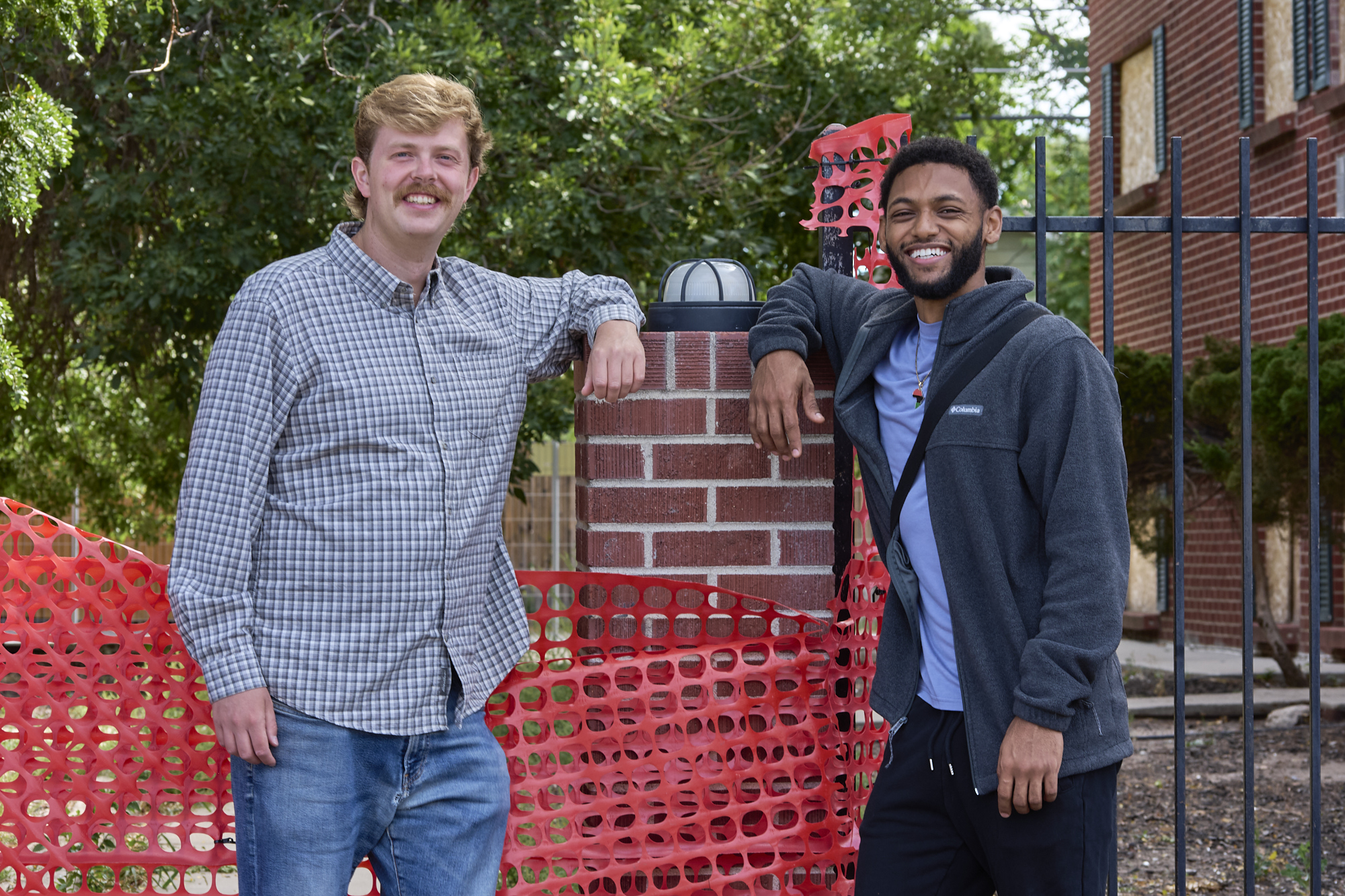
Carson Bryant, left, and Nate Kassa of the East Colfax Community Collective outside The Edge at Lowry. Photo: Andrew Fraieli
Housing and community power
What happens when a community takes the property, and the story, back?
A community nonprofit bought the Aurora apartments at the center of national headlines, and plans to rebuild them as affordable homes.
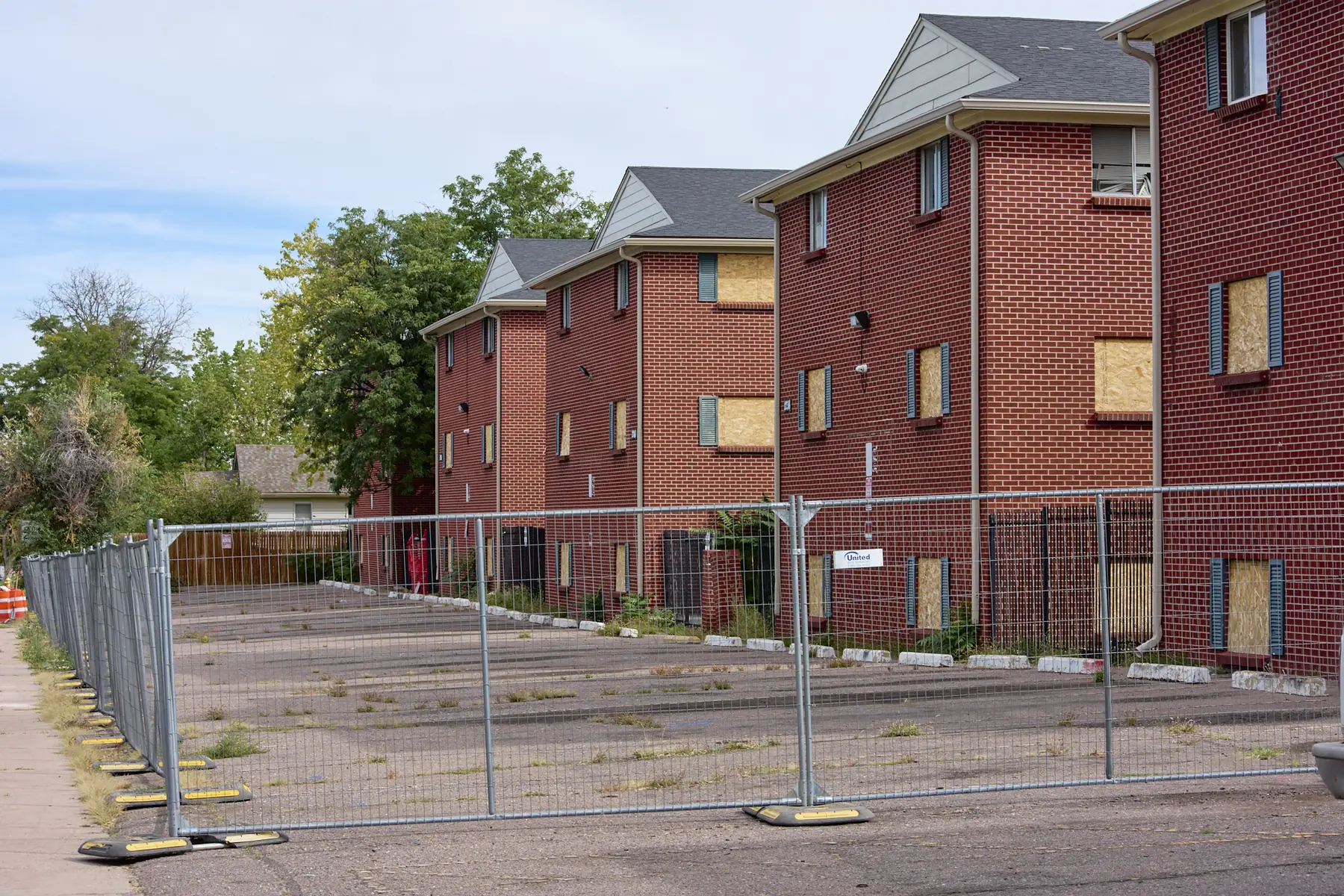
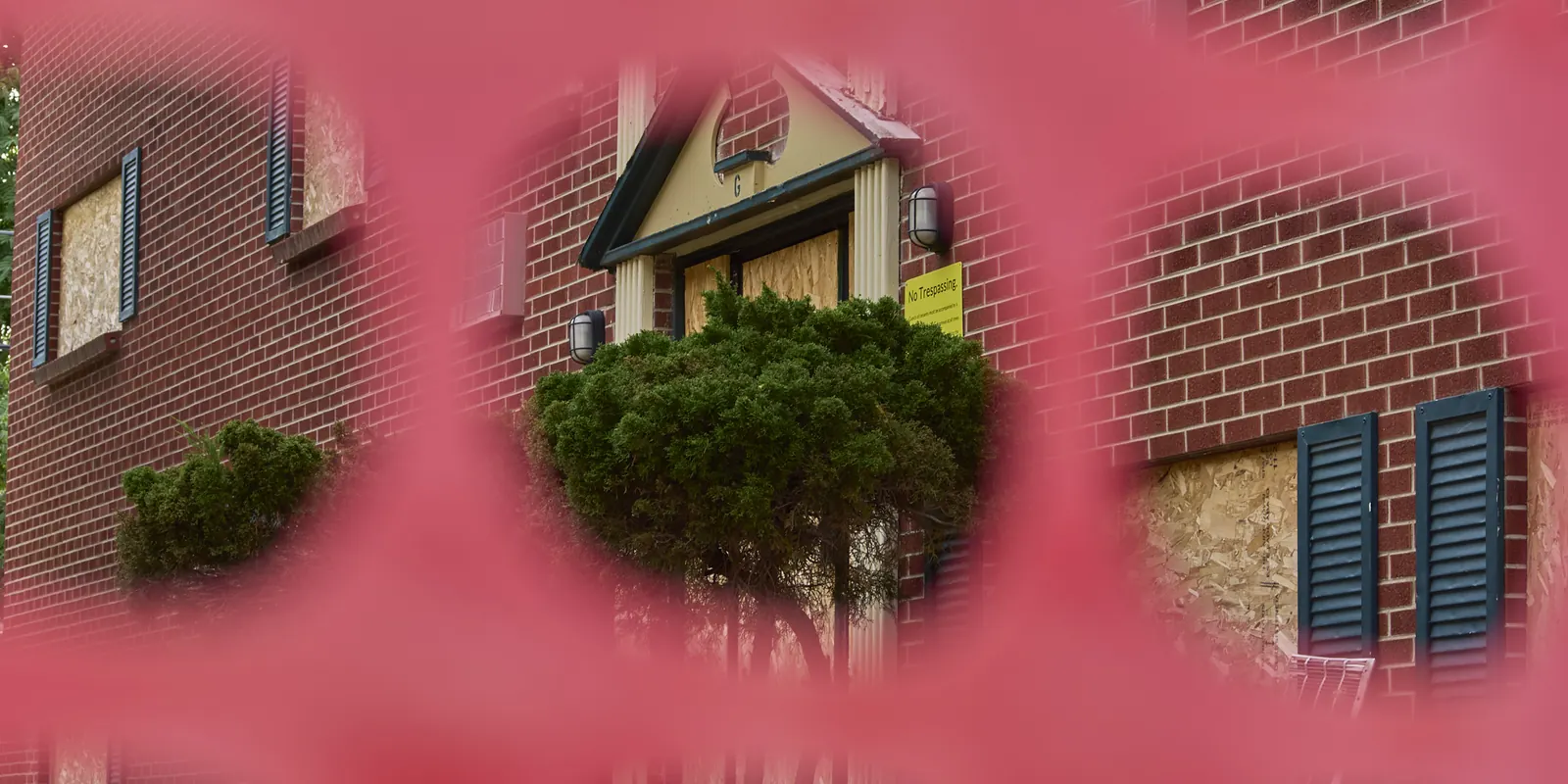
All that’s left of the life that once filled the hallways of The Edge at Lowry apartments in Aurora are cracks in the flooring, a few holes punched through walls, stacks of plywood that once served as doors, and the unmistakable smell of dust and animal urine.
Now, the empty red-brick complex offers the community a chance to rewrite its story.
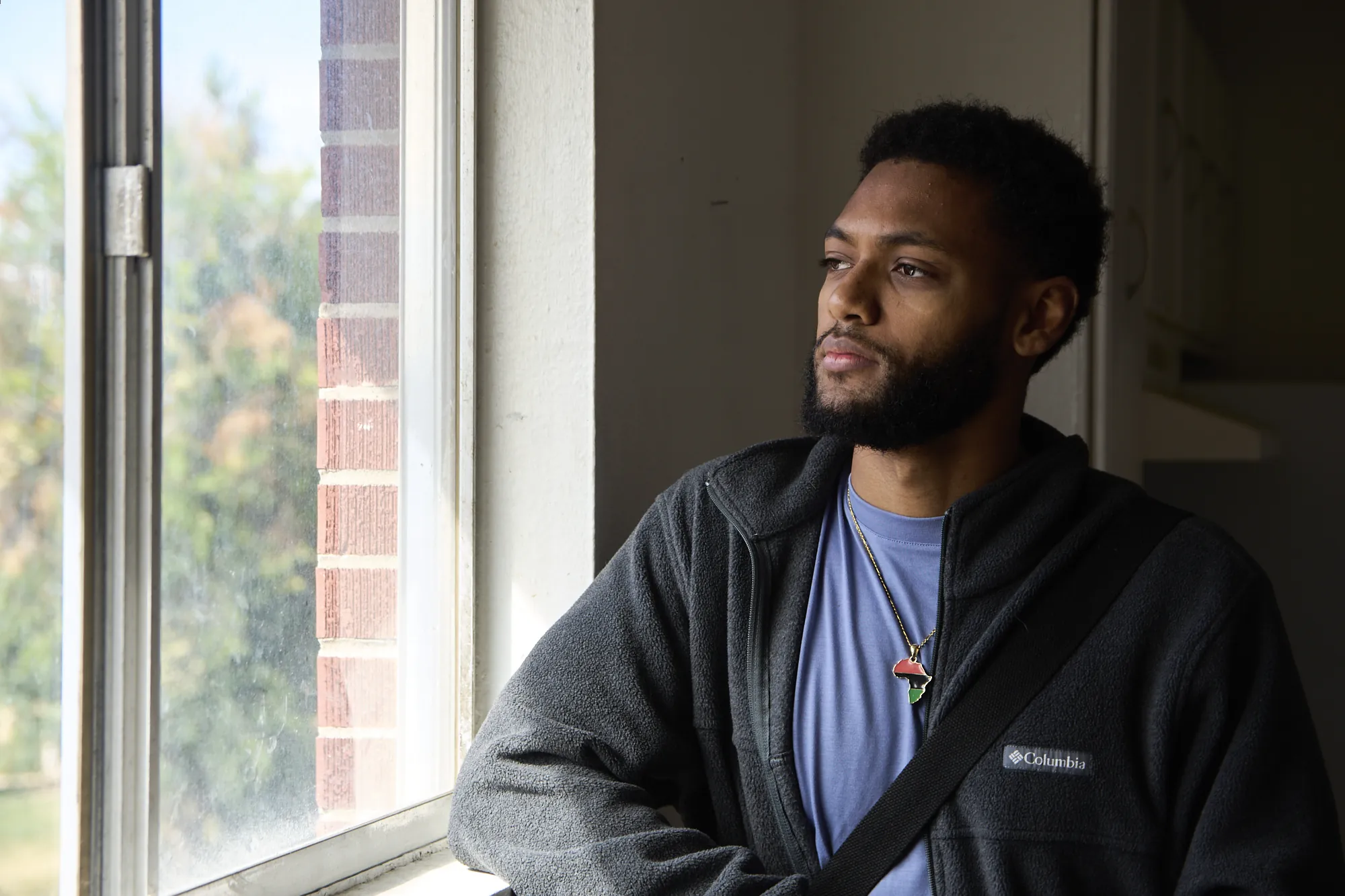
“This is a transformational opportunity for the neighborhood,” Carson Bryant, director of the East Colfax Community Collective’s Mixed-Income Neighborhood Trust, said during a recent tour of the property.
A New Chapter for The Edge
The East Colfax Community Collective – also known as EC3 – closed on the $4.5 million purchase of Edge in June with funding pooled from donations, nonprofits, and social impact investors like The Colorado Health Foundation. EC3 plans to turn it into an affordable housing complex for immigrant families.
It’s truly a blank slate, and the nonprofit intends to rebuild the complex from the studs. More than that, the project is a “power-building exercise,” Bryant said.
“Housing stability is an opportunity for people to change the narrative themselves,” he added.
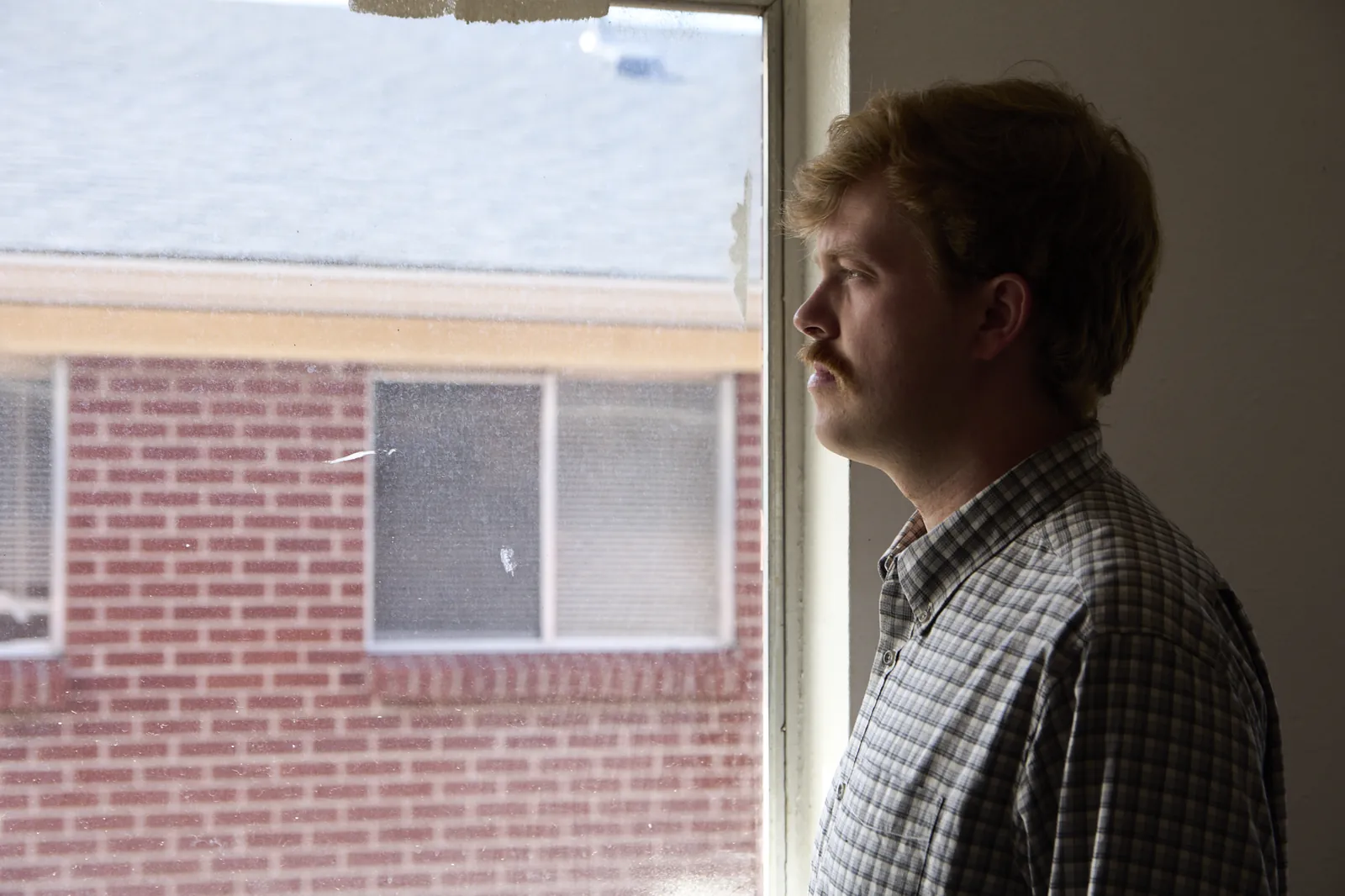
The Edge has had multiple identities. On one hand, it was home to nearly 100 people, many of whom were immigrants and people of color, in one of Aurora’s most diverse neighborhoods. Signs of that previous life still linger throughout the neighborhood, with kids' bicycles and toys dotting the lawns of surrounding homes.
But the complex also gained national notoriety for all the wrong reasons in 2024. At the time, then-presidential candidate Donald Trump and a handful of local leaders declared it the epicenter of a gang “invasion” in Colorado. All of a sudden, stories cropped up in the national media about alleged Venezuelan gang members running the complex, and that people in the surrounding neighborhood were being terrorized.
Did gang-affiliated individuals live there? Yes, and the Aurora Police Department was well aware of that. But had gangs “taken over” the complex, as some claimed? Aurora's then-interim police chief said at the time that police had found no evidence of a takeover.
“It was an obvious political opportunity to paint immigrants as the source of all problems happening across the country,” Bryant said.
Housing Stability, Community Stability
Affordable housing is often discussed as a matter of where to put bricks and sticks. But the story often runs deeper than a building’s facade. Where someone lives can shape how the broader community perceives them, as well as their mental and physical health.
The apartment building is in a part of town that is at risk of gentrification, according to the Urban Displacement Project. More than three-quarters of residents are people of color, and 62% of homes are renter-occupied. At the same time, the Colorado Judicial Branch has recorded more than 1,400 evictions in the nearby neighborhood between 2024 and 2026.
Housing in the surrounding area
62%
of homes in the surrounding area are renter-occupied.
Each window stands for 2% of homes.
More than
1,400
evictions recorded in the nearby neighborhood between 2024 and 2026.
Eviction records: Colorado Judicial Branch.
These factors can be a double-edged sword for low-income households. For instance, research has found that evictions are associated with elevated preterm birth rates in Black women. Displacement can also exacerbate feelings of grief, stress, and isolation.
The redevelopment is happening at a time when Colorado’s increasing cost of living is making it harder for immigrant families to set down roots. According to the Economic Research Institute, Colorado is about 10% more expensive to live in than the national average, which can make it difficult for low-income households to afford living in the state.
Housing is one of the primary drivers of Colorado’s expensive cost of living. Over the last three years, the median sales price of a home in the Centennial State has increased by 15% to $552,000, according to Redfin data. While rent growth has moderated, households can still expect to pay an average rent of over $2,100 a month, which is about 18% above the national average, Zillow data shows.
That’s what makes the redevelopment about more than fixing up a few units, pulling weeds, and adding lights and benches to a couple of courtyards.
On the outside, the power-building that Bryant describes will be easy to see. The nonprofit will remove the lead-based paint and asbestos present throughout the five-building complex, install energy-efficient amenities, and fix the parking lot, which has nearly as many holes as a cheese grater.
Addressing the building's aesthetics is just one way to change the narrative about the people who lived there, said Nate Kassa, a community organizer with EC3. The nonprofit also plans to establish ways for Edge residents to rebuild a sense of community. For instance, the nonprofit has regularly engaged with former residents and surrounding neighbors about building and amenity improvements. Those conversations have inspired EC3 to add more community spaces for families to gather.
Power Beyond the Property
The nonprofit has also engaged with residents at a nearby building once operated by CBZ Management to advocate for municipal-level change. Those efforts helped pass Senate Bill 25-020, which established new mechanisms to put under-resourced buildings into receivership, thereby speeding up the process of divesting a negligent owner, Kassa said. Kassa also cited EC3's advocacy on Denver's rental licensing rules, which began taking effect in 2023.
Altogether, the efforts are about reestablishing the fact that the community cares about the people who live there.
“We’re recognizing that the beauty of this community was always here. This place will be a microphone for people to shout it out.”